Precision in Power: The Busbar Cutting Machine and Its Accuracy in Copper Bar Processing
In the modern electrical and power distribution industry, copper busbars are indispensable. They serve as the primary conductors in switchgear, panel boards, distribution systems, and power control centers. To ensure reliable performance and long service life, copper busbars must be processed with exceptional accuracy. One of the most critical stages in this process is cutting, and that is where the busbar cutting machine proves its value.
Designed to handle the demanding requirements of copper processing, a busbar cutting machine provides clean, precise, and efficient cuts that directly impact the quality and reliability of the final electrical product. This article explores the capabilities of the busbar cutting machine, with special emphasis on its ability to accurately cut copper bars, and why this accuracy is vital to industries worldwide.
The Role of Copper Busbars in Power Distribution
Before diving into the machine itself, it is important to understand why busbars—and particularly copper busbars—are so essential.
- High Conductivity: Copper’s superior electrical conductivity ensures minimal power loss.
- Durability: Copper busbars withstand high current loads, resist corrosion, and last for decades.
- Compact Design: Busbars allow for more efficient layouts than traditional wiring, reducing space requirements.
- Versatility: They are widely used in switchgear, transformers, substations, data centers, renewable energy systems, and industrial machinery.
Given their central role in electrical infrastructure, it is crucial that copper busbars are manufactured and prepared with the highest level of precision. Even a small error in cutting can lead to poor fitting, misalignment, or reduced conductivity.
The Importance of Accurate Cutting
Accuracy in cutting copper bars affects not only the functionality of electrical equipment but also the safety and efficiency of the entire system.
- Dimensional Accuracy
Busbars must fit precisely into designated slots, clamps, and connectors. Inaccurate cuts can cause gaps, uneven edges, or poor contact, which in turn may lead to overheating or arcing. - Smooth Edges
Clean cuts with smooth edges reduce the need for secondary finishing and ensure safe handling. Rough or jagged cuts can damage insulation or create risks during installation. - Time and Cost Efficiency
Accurate cutting minimizes material waste and eliminates costly rework. Since copper is a premium material, reducing scrap is a major economic advantage. - Consistency in Production
For manufacturers producing large volumes of busbars, consistency is key. A reliable cutting machine ensures that every piece meets the same high standard.
What is a Busbar Cutting Machine?
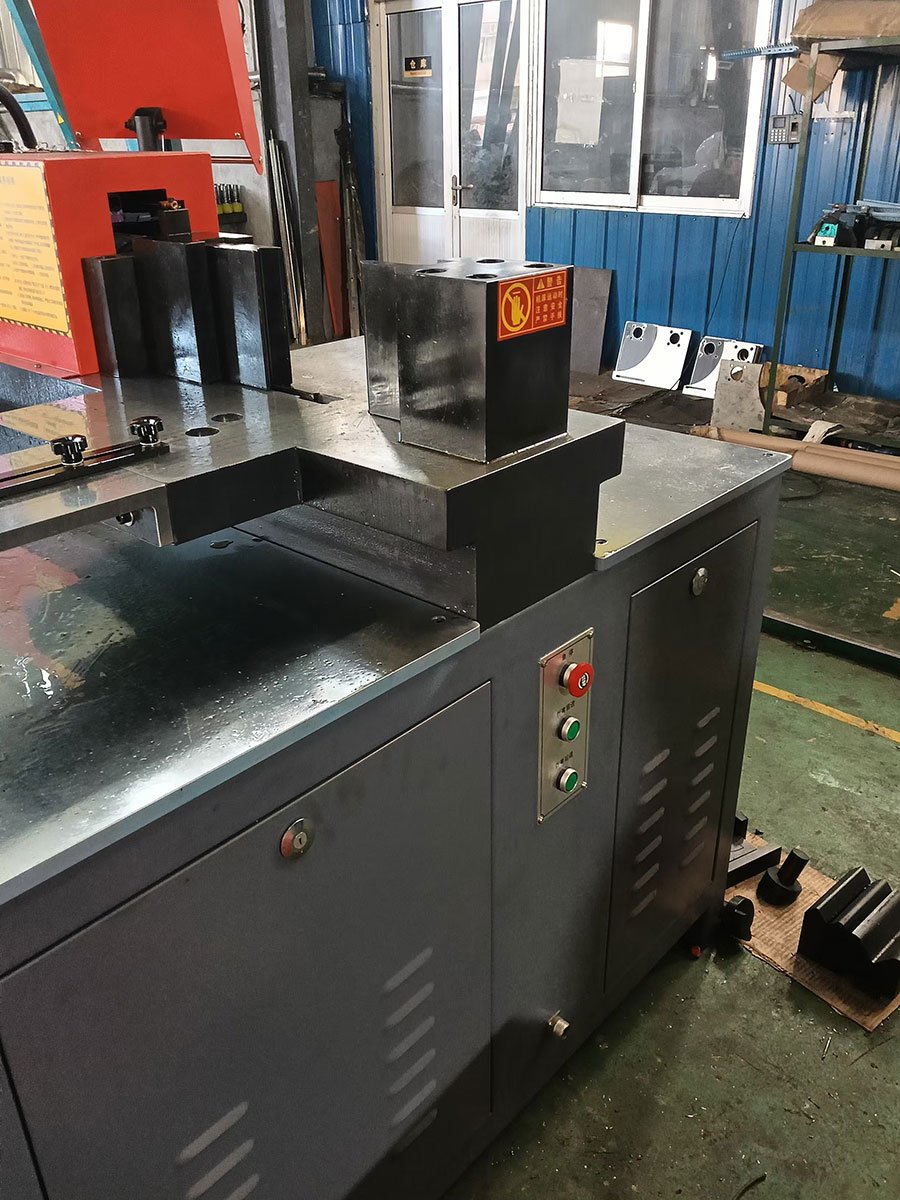
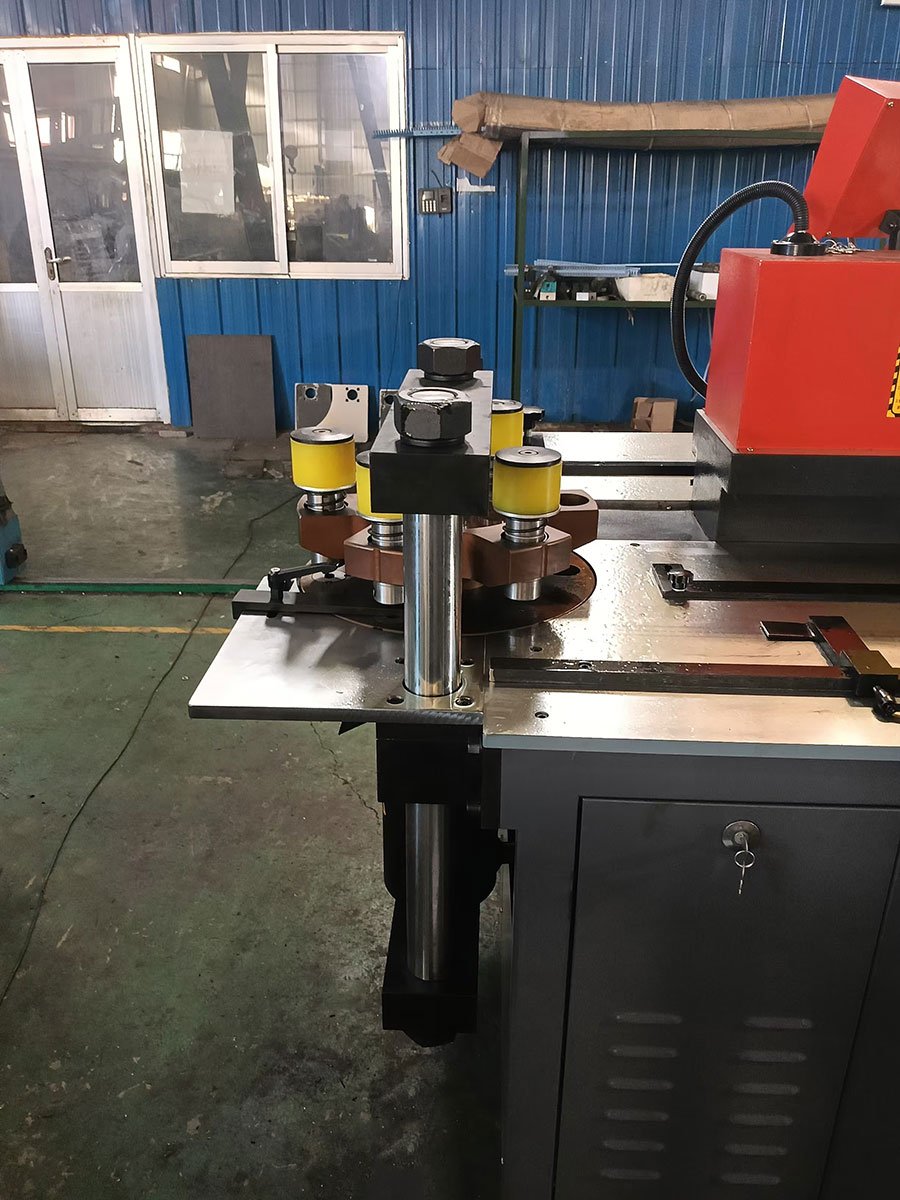
A busbar cutting machine is a specialized piece of equipment designed to cut copper and aluminum bars with high precision. Unlike manual tools or general-purpose cutting machines, busbar cutters are engineered specifically for electrical busbar applications.
Key Features
- Hydraulic or Servo Operation: Most machines use hydraulic pressure or servo-driven systems to deliver strong, steady cutting power.
- Hardened Blades: High-quality steel blades ensure long life and clean cuts.
- Automatic Measuring System: Advanced models are equipped with digital control systems that automatically measure and adjust cutting lengths.
- Safety Mechanisms: Protective covers, emergency stops, and controlled operation guarantee operator safety.
- Integration Capabilities: Modern machines can be integrated into busbar processing lines that also include punching and bending stations.
Cutting Copper with Precision
The highlight of a busbar cutting machine is its ability to cut copper bars with exact precision. This accuracy comes from a combination of advanced engineering and intelligent design:
- High Cutting Force
Copper is a tough and ductile metal. A busbar cutting machine generates sufficient force to cut through thick bars—often up to 16 mm in thickness—without deforming or bending the material. - Stable Clamping System
During cutting, the bar must remain stable to avoid misalignment. Machines are equipped with robust clamping systems that hold the copper firmly in place, ensuring every cut is straight and accurate. - Precision Measuring Devices
Digital measuring rulers or CNC controls allow operators to set cutting lengths with millimeter-level accuracy. This guarantees that every busbar meets exact design specifications. - Consistent Edge Quality
The sharp blades and optimized cutting mechanism result in smooth, burr-free edges, reducing the need for additional finishing work. - Repeatability
Once programmed, the machine can repeat the same cut hundreds or thousands of times with identical results, ensuring consistency in mass production.
Applications Across Industries
The accuracy of a busbar cutting machine makes it indispensable in many industries:
- Electrical Switchgear Manufacturing – Copper busbars are cut to precise sizes to fit switchboards and control panels.
- Renewable Energy Systems – Solar and wind power installations rely on accurately cut busbars for reliable energy transfer.
- Transportation – Electric vehicles, trains, and ships use copper busbars in their power systems.
- Data Centers – Reliable power distribution requires precisely manufactured copper busbars for uninterrupted operations.
- Heavy Industry and Infrastructure – Factories, steel plants, and utility companies depend on accurate busbar systems for high-current applications.
Advantages of Using a Busbar Cutting Machine
By focusing on precision cutting of copper, busbar cutting machines offer several advantages:
- Improved Quality Control – Every busbar is cut to exact specifications.
- Reduced Material Waste – Optimized cutting reduces off-cuts and scrap.
- Enhanced Productivity – Automatic feeding and measuring save time and labor.
- Greater Safety – Machines minimize manual handling, reducing operator risk.
- Long-Term Reliability – Accurate cuts contribute to durable, efficient electrical systems.
The Future of Busbar Cutting
As industries move toward automation and smart manufacturing, busbar cutting machines continue to evolve. Future trends include:
- CNC Integration for full automation of cutting, punching, and bending.
- IoT Connectivity to monitor machine performance and maintenance needs.
- Energy-Efficient Systems that reduce power consumption during operation.
- AI-Assisted Precision to optimize cutting patterns and minimize waste.
With these advancements, the busbar cutting machine will continue to play a crucial role in electrical infrastructure worldwide.
Conclusion
In the world of power distribution, accuracy is everything. The busbar cutting machine ensures that copper busbars—the lifelines of electrical systems—are cut with the highest precision. From smooth edges to exact lengths, its capabilities directly influence the efficiency, safety, and reliability of modern electrical equipment.
For manufacturers, investing in a high-quality busbar cutting machine means more than just better cuts—it means better products, reduced costs, and stronger competitiveness in a demanding global market. As technology advances, these machines will only grow more accurate, efficient, and indispensable in shaping the future of power distribution.